
Electric scooters, also known as e-scooters, are widely used throughout California by both teens and adults. The arrival of rentable e-scooters from companies like Bird, Lime and Spin led to an explosion of these vehicles on California roads. Taking a look at the latest California electric scooter laws can keep you informed as a rider or driver.
What Is an Electric Scooter?
Electric scooters are not the same as mopeds, motorized bicycles or motorcycles in California. They have their own definition under California Vehicle Code (CVC) §407.5:
- (a) A “motorized scooter” is any two-wheeled device that has handlebars, has either a floorboard that is designed to be stood upon when riding or a seat and footrests in place of the floorboard, and is powered by an electric motor.
Dockless e-scooters are available for rent to the public in California, as well as for private purchase. Unfortunately, many people rent electric scooters without understanding their risks or the laws that apply to them.
Who Can Operate an Electric Scooter in California?
In California, you must be at least 16 years old to operate an electric scooter on public roads. However, most e-scooter rental companies have a minimum age of 18. The operator must have a valid driver’s license or learner’s permit to operate an e-scooter, according to CVC §21235. E-scooters do not need to be registered by the California Department of Motor Vehicles.
Do I Need a Helmet to Ride an E-Scooter in California?
Safety helmets are mandatory for all e-scooter operators who are under the age of 18 in California. Minors are required to wear helmets at all times while riding. Adults 18 and older are strongly encouraged to wear helmets to help prevent serious and fatal traumatic brain injuries in potential e-scooter accidents.
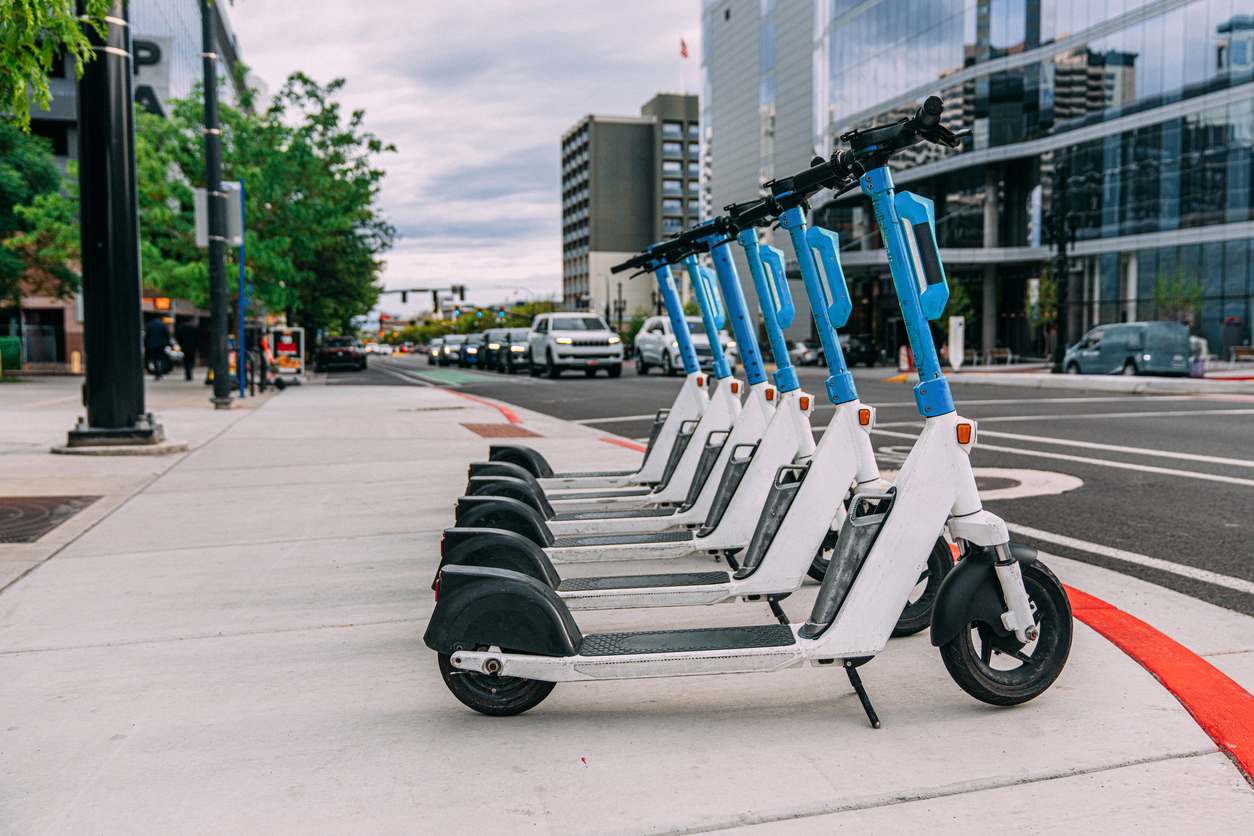
Electric Scooter Laws in California
What Rules and Regulations Apply to E-Scooters?
Motorized scooters are subject to special laws in California. For example, e-scooter operators may not carry passengers. When operating an e-scooter, the rider must not carry bulky items that remove either hand from the handlebars or block the rider’s view of the road.
All e-scooters must be equipped with working brakes, a white front light, a red rear reflector and side reflectors. Note that municipal governments in California may impose unique citywide rules on e-scooters, as well.
Where Can E-Scooters Be Ridden?
Electric or motorized scooters may not be driven on sidewalks in California. They must be operated in bicycle lanes and paths where available, and on the roadway when not. E-scooters may not be used on roads or highways with speed limits in excess of 25 miles per hour (mph). Motorized scooters may not be left on sidewalks in a way that obstructs pedestrian traffic.
What Traffic Laws Apply to Motorized Scooters?
E-scooter users must comply with all the same traffic laws and roadway rules as standard motorists. This includes posted speed limits, stop signs, traffic control signals and right-of-way laws. E-scooter operators have the same rights and responsibilities as motor vehicle drivers in California.
How Fast Can I Go on an Electric Scooter in California?
E-scooter speeds are restricted to 15 miles per hour under CVC §22411. The maximum speed that an e-scooter can travel unassisted is 15 miles per hour; this applies to the operation of a motorized scooter on all highways and bikeways, regardless of the posted speed limit on the road.
Who Pays for an E-Scooter Accident in California?
If you get involved in a e-scooter accident, contact an experienced San Francisco e-scooter accident attorney at Jacoby & Meyers for a free discussion regarding your rights. You may be eligible for compensation. In California, the fault-based law permits accident victims to file claims against the at-fault party. A negligent driver, part manufacturer or government agency could potentially be held liable for your e-scooter accident.